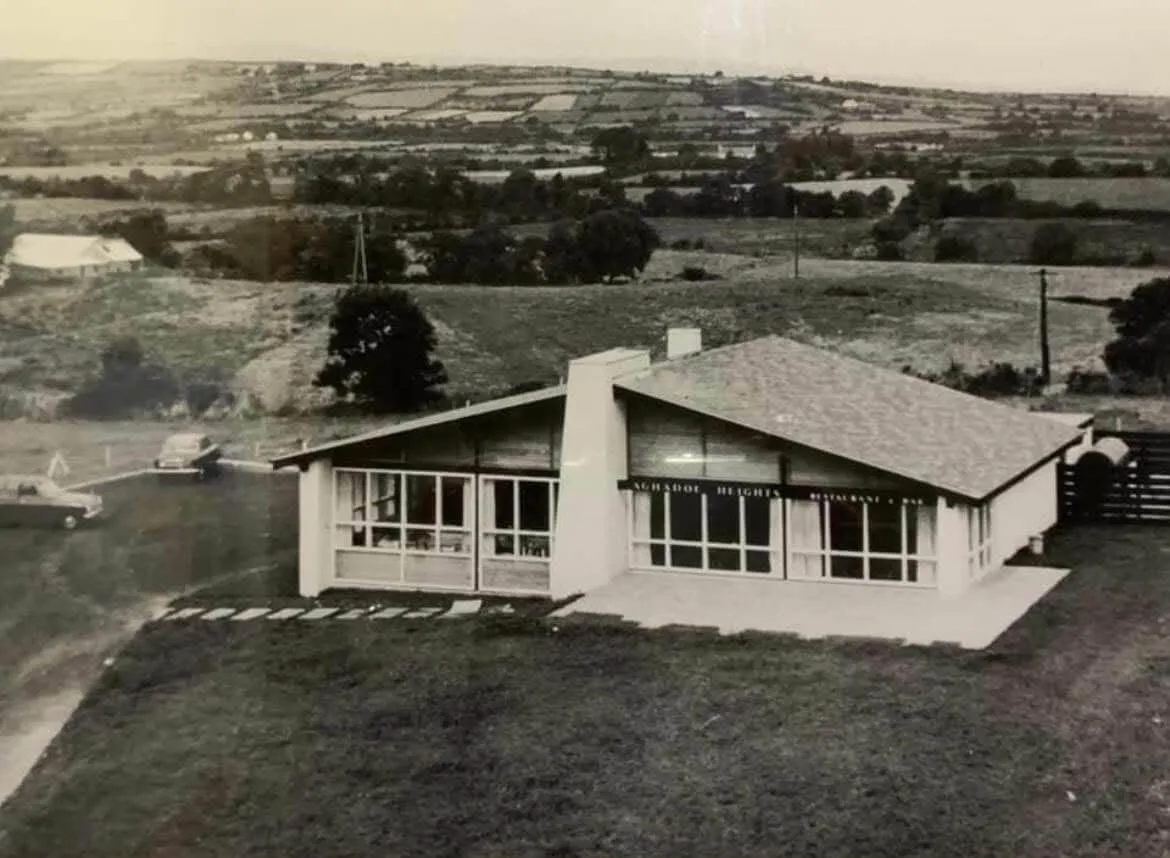
Even before Christianity, Aghadoe was viewed as a special, spiritual place. The Paps Mountains, visible from the hotel, were called ‘Dhá Chíoch Danu’ in Gaelic, which means ‘the two breasts of Danu’. This was the name of the Celtic female goddess, who was regarded as the mother of the gods. The first inhabitants of Ireland, the ‘Tuatha Dé Danann’, were named after her.
The Celts didn’t see their splendid landscape as just a fine view. They were deeply religious, and these woods, mountains and lakes were loaded with magical and mysterious significance. They represented messages of life and fertility, with the Paps’ two breast-shaped hills interpreted as symbols of female power.
These people also associated the area west of Ireland with death and ‘the other world’. Indeed native Gaelic speakers still say today that someone has ‘gone west’ if they have died.
The first reference to Aghadoe, – or ‘Achadh dá eo’ in Gaelic, meaning ‘the field of two yew trees’ – is thought to appear in a poem ascribed to Oisín. He was the son of Finn MacCool, who led a band of warriors called the Fianna – Ireland’s protectors from foreign invasion in the years just after Christ’s birth.
The first known Christian settlement was established at Aghadoe in the fifth century, probably by St Abban, a missionary of St Patrick’s.
Two centuries later, St Finian is thought to have created a monastic centre at Aghadoe and on Innisfallen Island below, which were linked by a causeway.
The Annals of Innisfallen, which is a history of Ireland written between 900 and 1300 AD, refers to Aghadoe from 938AD. A reference in the ‘Calendar of Oengus’ refers to ‘Achade deo’ as a place for expelling demons.
Aghadoe overlooks Lough Lein, which was called the ‘lake of learning’ because it was a major educational centre attracting pupils from all over Europe between 900 and 1000AD. Lough Lein and the surrounding area plays a pivotal role in Irish mythology; in one of its greatest stories, Oisín and Niamh ‘went west’ from Lough Lein over the mountains to Tír na N-og, ‘the land of eternal youth’.